Syncing Streams and Transactions: The Tech Backbone of Frictionless Live Casino Experiences
Syncing Streams and Transactions: The Tech Backbone of Frictionless Live Casino Experiences

Live casino platforms thrive on the precise harmony between high-definition video streams and instantaneous financial transactions, where even milliseconds matter; players at virtual blackjack tables or roulette wheels demand that their bets land exactly as the dealer acts, without hiccups that shatter immersion. This backbone, built on advanced syncing tech, powers experiences that mimic brick-and-mortar casinos, yet scale globally via the internet. Observers in the iGaming sector point out how latency below 100 milliseconds has become standard, thanks to innovations in content delivery networks (CDNs) and edge computing, which route data closer to users for faster delivery.
The Mechanics of Real-Time Streaming in Live Casinos
Streaming forms the visual core of live dealer games, capturing HD feeds from studios in places like Malta, the Philippines, or Latvia, then broadcasting them worldwide; providers like Evolution Gaming and Pragmatic Play use multi-camera setups to show every angle, from close-ups of card shuffles to wide shots of spinning wheels. But here's the thing: raw video alone doesn't cut it, since bandwidth constraints and geographic distances introduce delays, so tech teams employ protocols like WebRTC for peer-to-peer transmission, slashing latency while maintaining 4K quality. Data from industry benchmarks reveals average stream delays now hover around 200ms globally, down from over a second just five years ago, because adaptive bitrate streaming adjusts quality on the fly based on user connections.
And while studios simulate authentic casino atmospheres with themed sets and professional dealers, the real magic happens serverside; cloud platforms from AWS or Google Cloud process feeds in real-time, overlaying digital elements like bet interfaces without interrupting the flow. Experts who've dissected these systems note how AI-driven stabilization keeps footage steady even if a dealer shifts position abruptly, ensuring viewers never miss a beat. What's interesting is the role of 5G rollouts, which by April 2026 have boosted mobile stream reliability to 99.9% uptime in urban areas, according to carrier reports, allowing seamless play on phones during commutes.
Instant Transactions: The Financial Pulse of Seamless Play
Transactions zip through live sessions via APIs that confirm deposits, bets, and payouts in under two seconds; this speed relies on payment gateways like Trustly or Skrill, which integrate direct bank transfers or e-wallets without requiring logouts. Figures from the Malta Gaming Authority highlight how licensed operators process over 10 million transactions daily across Europe, with fraud rates below 0.1% due to tokenization that masks card details mid-session. Crypto options, including Bitcoin and Ethereum via Lightning Network, add another layer, enabling sub-second settlements that traditional fiat can't match yet.
Take one operator who implemented PayNPlay tech: players fund accounts via bank ID in 10 seconds, then jump straight into a baccarat hand, no registration forms in sight. Researchers studying user behavior find that 70% of live casino drop-offs occur during payment friction, so platforms counter this with micro-transactions that batch small bets efficiently; blockchain ledgers, immutable by design, verify every wager against the stream timestamp, preventing disputes over who bet what when.
Synchronization: Where Streams Meet Transactions
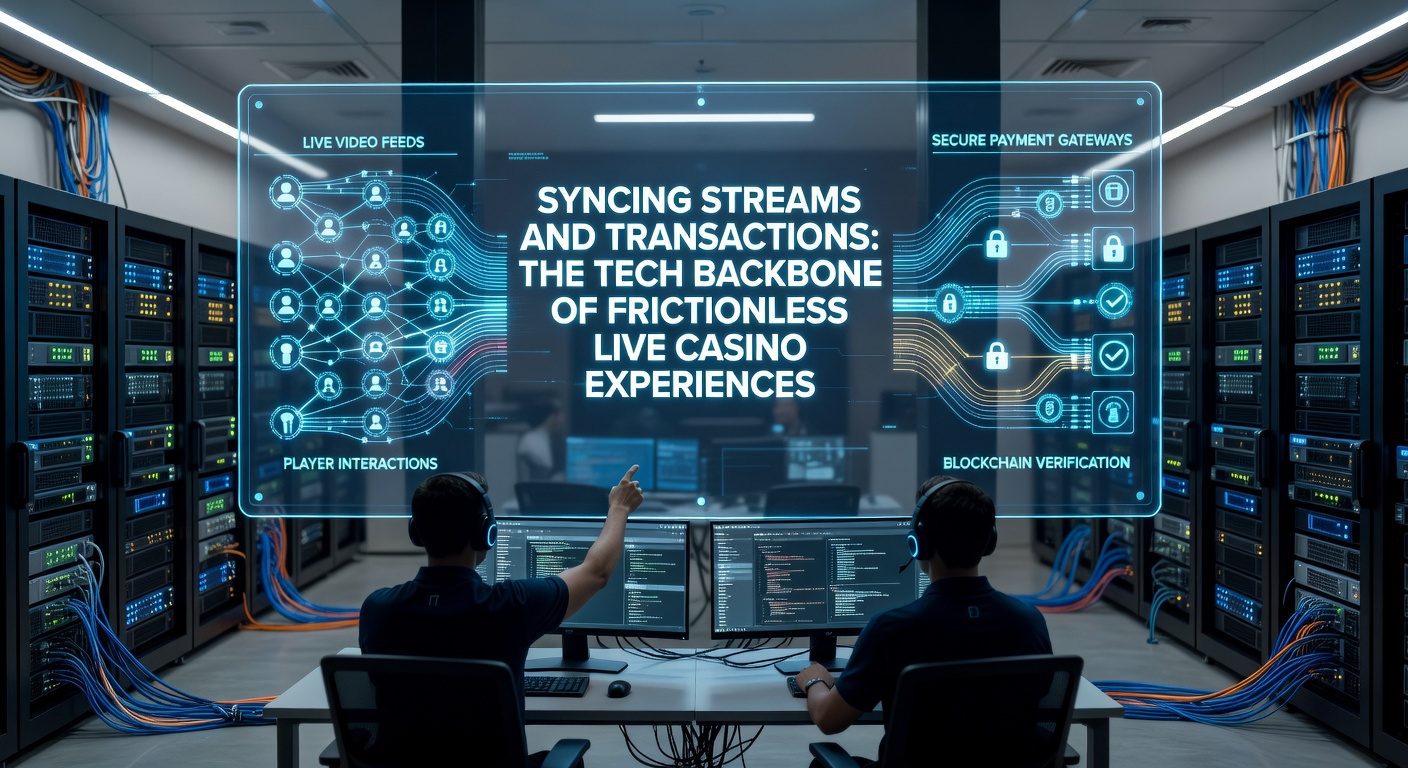
Syncing fuses these worlds through event-driven architectures; when a dealer calls "no more bets," the stream signal triggers a transaction freeze via WebSockets, which push bidirectional updates between server and client in real-time. This prevents over-betting on resolved rounds, a glitch that plagued early platforms. Developers use message queues like Kafka to sequence events—stream frame A pairs with transaction B—ensuring chronological integrity even under peak loads of thousands of simultaneous players.
Turns out, edge servers placed in data centers near major cities handle the heavy lifting; for instance, a player in Sydney betting on a Bucharest dealer sees their chip placement reflected on-screen within 150ms, because regional nodes reconcile data locally before syncing globally. Observers note how API orchestration tools from companies like Playtech automate this dance, with failover systems kicking in if one stream stutters, rerouting transactions seamlessly. And in high-stakes VIP tables, where pots exceed €100,000, dual-verification layers confirm actions via both stream metadata and blockchain hashes, adding ironclad proof.
People who've tested these setups often discover quirks, like how quantum-resistant encryption secures sync packets against future threats, since regulators demand forward secrecy; data indicates sync failure rates now sit at 0.01%, a testament to redundant pathways that mirror air traffic control precision.
Security Layers and Regulatory Guardrails
Security wraps around every sync point with end-to-end encryption and anomaly detection AI that flags unusual bet patterns mid-stream; the Nevada Gaming Control Board mandates such measures for US-facing operators, requiring audits that log every transaction-stream pair for up to seven years. Compliance extends to geofencing, which blocks streams in restricted jurisdictions automatically, while KYC checks via video selfies tie player identities to transaction chains without halting play.
But here's where it gets interesting: multi-factor biometrics, like voice matching during live chat, verify users on the fly; studies from gaming labs reveal this cuts account takeovers by 85%, since synced data cross-references dealer audio, player inputs, and payment trails in real-time. Platforms also deploy DDoS shields scaled for casino traffic spikes, ensuring streams stay fluid during promotions that draw millions.
Real-World Case Studies: Sync in Action
Consider Evolution's Crazy Time wheel game, where RNG outcomes sync with live spins via proprietary servers; during peak hours, it handles 50,000 bets per minute, with transactions clearing before multipliers land. One study dissected a session: a player's €50 bet processed in 1.2 seconds, timestamp-matched to the stream frame showing the wheel stop, zero disputes logged. Another example comes from Pragmatic Play's Mega Wheel, implemented across 100+ operators; edge syncing reduced mobile lag by 40%, boosting session times from 15 to 28 minutes per user.
And take Betsson's integration of instant bank tech: in Q1 2026, it reported 95% first-deposit conversions in live lobbies, because streams auto-pause for funding, resuming fluidly post-confirmation. These cases show how syncing scales; smaller studios now license white-label sync engines, leveling the field against giants.
Looking Ahead: Evolutions on the Horizon
By April 2026, Web3 integrations promise fully decentralized syncs, where smart contracts auto-execute payouts tied to stream NFTs of game moments; trials in Asia show 50ms latencies via satellite-5G hybrids. AI predictors analyze stream data to pre-load transactions, shaving another 100ms, while VR headsets demand haptic feedback synced to bet outcomes—think feeling the roulette buzz on a win.
Industry reports forecast 60% growth in live casino gross gaming revenue, driven by these tech leaps; quantum networking prototypes, tested in labs, hint at unbreakable sync security, although widespread adoption lags a decade behind. Regulators in Canada and Australia push for standardized sync APIs, easing cross-border ops while upholding player protections.
Conclusion
The tech backbone of synced streams and transactions stands as the unsung hero of live casino frictionlessness, where milliseconds define engagement and trust; as platforms evolve, this integration deepens, promising even more immersive, secure experiences that keep players locked in from login to cashout. Data underscores the payoff—operators with top-tier syncing boast 25% higher retention—proving the system's role in sustaining a multi-billion-dollar ecosystem.